- contact@welowcode.com
- Hampton, VA 23662

Integrating Mendix with Legacy Systems: Overcoming Enterprise Barriers
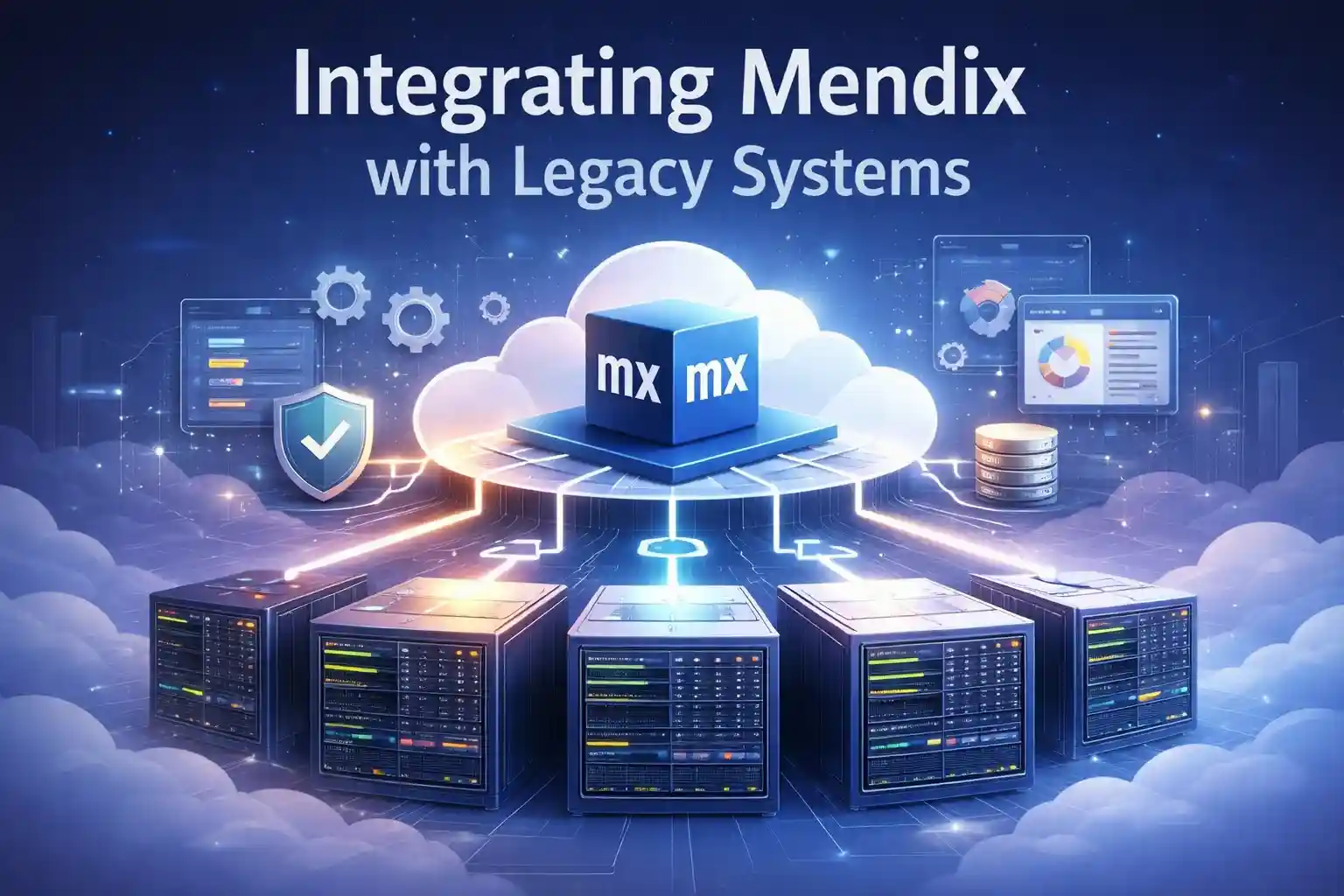
Enterprise digital transformation rarely starts with a blank slate. Most organizations operate within complex technology ecosystems built over decades – ERP platforms, mainframe systems, internal databases, proprietary workflows, and industry-specific applications. These legacy systems often remain mission-critical because they support core business operations.
However, while legacy systems provide stability, they also create barriers to innovation. Integration complexity, rigid architectures, and outdated interfaces often slow modernization efforts. Enterprises attempting to launch new digital services frequently discover that the biggest obstacle is not building new applications—it is connecting them to the systems already in place.
This is where Mendix plays an increasingly strategic role. Rather than replacing legacy infrastructure entirely, enterprises use Mendix to create modern application layers that integrate with existing systems while enabling continuous digital evolution.
The Enterprise Reality of Legacy Infrastructure
Legacy systems are often misunderstood. They are frequently labeled as outdated technology, yet many of these systems are highly reliable and deeply embedded within business processes.
Replacing them outright introduces several risks:
Operational disruption
High financial investment
Long migration timelines
Compliance and data integrity concerns
As a result, most enterprises seek modernization strategies that allow them to retain legacy functionality while introducing new digital capabilities.
Integration becomes the central challenge.
Why Integration Becomes the Primary Barrier
Legacy systems were rarely designed with modern integration standards in mind. Many rely on proprietary protocols, tightly coupled architectures, or direct database access patterns that limit interoperability.
Common integration barriers include:
Limited API availability
Monolithic system dependencies
Complex data structures
Security restrictions around core systems
Performance limitations during peak workloads
When new applications attempt to interact with these systems directly, the architecture often becomes fragile. Even small changes can introduce cascading failures across dependent processes.
Enterprises therefore require integration strategies that balance innovation with operational stability.
Mendix as an Integration and Orchestration Layer
Mendix allows enterprises to introduce a modern application layer without dismantling existing systems. Instead of interacting directly with legacy infrastructure, new digital services can be orchestrated through Mendix applications that act as a controlled integration interface.
This approach allows organizations to:
Expose legacy capabilities through APIs
Automate workflows across multiple systems
Build modern user interfaces without modifying core platforms
Introduce new services incrementally
Rather than replacing legacy systems immediately, enterprises extend them through structured integration layers.
This incremental approach reduces modernization risk while enabling faster innovation cycles.
API-First Modernization Strategies
One of the most effective ways to integrate Mendix with legacy systems is through API-driven architecture.
Instead of allowing applications to communicate directly with underlying databases or proprietary interfaces, organizations create standardized service layers that expose business capabilities through secure APIs.
Benefits of API-first integration include:
Controlled system interactions
Improved security governance
Clear version management
Simplified maintenance of integration logic
This approach gradually transforms legacy environments into service-enabled ecosystems where new digital applications can evolve independently.
Enterprises that work with experienced Mendix experts often prioritize API strategy early in modernization initiatives to prevent long-term architectural limitations.
Data Synchronization and Performance Considerations
Integrating with legacy systems also introduces data management challenges. Many legacy environments maintain complex data models that were not designed for distributed access.
Architects must consider:
Data consistency across systems
Transaction management between services
Latency introduced by synchronous integrations
Event-driven data synchronization
In many cases, asynchronous messaging patterns provide better scalability than direct synchronous calls. Event-driven architectures allow applications to react to system updates without creating performance bottlenecks.
Carefully designed data synchronization ensures that integration does not compromise performance.
Security and Compliance Alignment
Legacy systems often operate within strict security frameworks. Financial institutions, healthcare providers, and government organizations must comply with rigorous regulatory requirements when integrating new digital applications.
Mendix integration architectures must therefore support:
Role-based access control
Secure API authentication
Encryption across system boundaries
Comprehensive audit logging
Security controls should be embedded into the integration architecture rather than layered on afterward.
This ensures modernization initiatives remain compliant with enterprise security standards.
Governance and Integration Consistency
As enterprises scale their digital transformation initiatives, integration governance becomes increasingly important. Without standardized practices, different teams may implement inconsistent integration patterns that create long-term maintenance challenges.
Governance frameworks typically define:
Approved integration methods
Standardized API design guidelines
Monitoring and logging requirements
Version control strategies for services
Organizations often engage specialized partners or a mature low-code development company to establish these governance models, ensuring integration patterns remain consistent as adoption grows.
Governance enables integration to scale without introducing architectural fragmentation.
Enabling Incremental Digital Transformation
One of the most important advantages of integrating Mendix with legacy systems is the ability to modernize incrementally.
Instead of attempting large-scale system replacements, enterprises can gradually introduce new capabilities while maintaining operational stability.
Examples include:
Building customer portals on top of legacy CRM systems
Automating manual workflows across internal applications
Introducing mobile interfaces for legacy processes
Creating analytics dashboards connected to existing data sources
Each new capability strengthens the digital ecosystem without requiring wholesale infrastructure replacement.
Over time, legacy systems evolve into stable back-end services within a broader modern architecture.
The Strategic Impact
Successful integration strategies allow enterprises to move beyond the traditional “modernize or replace” dilemma.
By positioning Mendix as an orchestration layer around legacy systems, organizations gain the ability to innovate rapidly while protecting mission-critical infrastructure.
The result is a balanced modernization strategy where:
Legacy stability is preserved
New digital services can be deployed quickly
Integration risk is minimized
Architecture evolves incrementally
This approach transforms legacy systems from barriers into foundational components of a modern composable enterprise architecture.
Conclusion
Legacy systems remain essential to many enterprise operations, but they do not have to limit innovation. By adopting structured integration strategies, organizations can modernize their digital capabilities without destabilizing existing infrastructure.
Mendix provides a flexible platform for orchestrating interactions between modern applications and legacy environments, enabling enterprises to evolve their architecture gradually while maintaining operational resilience.
Enterprises that treat integration as a strategic discipline rather than a technical afterthought create digital ecosystems capable of adapting to future demands. Teams such as We LowCode support organizations in designing Mendix integration architectures that connect legacy systems with modern digital platforms while preserving scalability, governance, and long-term operational stability.
About the author

Ashok Kata
Ashok Kata is the Founder of We LowCode, a top low-code firm in Hampton, VA. With 14+ years in IT, he specializes in Mendix, OutSystems, Angular, and more. A certified Mendix Advanced Developer, he leads a skilled team delivering scalable, intelligent apps that drive rapid, cost-effective digital transformation.
Ashok Kata
Ashok Kata is the Founder of We LowCode, a top low-code firm in Hampton, VA. With 14+ years in IT, he specializes in Mendix, OutSystems, Angular, and more. A certified Mendix Advanced Developer, he leads a skilled team delivering scalable, intelligent apps that drive rapid, cost-effective digital transformation.
- Ashok K
- Ashok K

We help businesses accelerate digital transformation with expert Low-Code development services—delivering secure, scalable, and future-ready solutions.
Contact us
Location
- Hampton, VA 23662 United States of America
Phone
- +1(512)-779-6895
Email us
- contact@welowcode.com